Just Launched: The SourceCo Marketplace. Access vetted, off-market founder-led deals before anyone else.
Last deal added: 12 hours ago · Avg deal size: $8.2M · Median revenue: $4.9M
See Live Deals →

%20(1).png)
Enter your site. We'll show you real buyers acquiring in your space. No signup. Confidential.
Show Me →
Takes 30 seconds · No cost
Enter your site. We'll show you real buyers acquiring in your space. No signup. Confidential.
Show Me
Takes 30 seconds · No cost
In short: PE deal sourcing tools fall into six categories: company databases (what exists), contact data (who to call), CRM (track relationships), outreach automation (run campaigns), intermediary platforms (advisor-represented deal flow), and fully managed origination services. Most teams over-invest in databases and under-invest in the contact data and outreach layer. This guide is organized by what each tool actually does in a deal team's workflow.
Most PE deal teams are working with a fragmented stack: one tool for sourcing data, another for managing relationships, a third for outreach, and Excel holding everything together with duct tape. It works, until it doesn't.
This guide covers the tools that actually matter for PE deal sourcing and pipeline management. Organized by the job they do, not by vendor category. We cover what each tool is genuinely good at, where it falls short, and which team profiles it fits.
We cover tools across seven categories:
[[divider]]
SourceCo is a buy-side deal-sourcing firm that helps PE firms and corporate investors identify off-market M&A targets that others miss.
SourceCo's strategic use of technology, coupled with deep industry expertise, makes it an ideal choice for firms targeting niche sectors or looking to scale their deal flow efficiently.

Private equity firms seeking a competitive edge with access to exclusive off-market deals, and those looking to scale acquisition efforts efficiently.
"SourceCo was able to generate numerous actionable opportunities within the first 90 days of the campaign in a highly competitive and niche space with consistent and detailed reporting along with a thorough process."
"They took the time to understand exactly what we are seeking and used their tech-enabled platform to deliver a steady stream of relevant opportunities. Huge value add to our BD team and highly recommend." - Daniel Florian, Managing Director, Sun Capital Partners
For more information, check out SourceCo's deal sourcing page, or request your free company dataset.
SourceScrub is a deal sourcing tool that offers in-depth data on private companies, helping private equity and corporate development teams identify niche, off-market opportunities. It often lacks granular data on private companies (whether a company is union/non-union, ownership structures) however.

Private equity firms and corporate development teams seeking information about private companies.
Deal teams can quickly compile a list of niche tech companies within specific revenue brackets and identify firms showing growth signals like recent funding rounds or new hires.
Grata is an AI-powered company search engine designed to help private equity firms and investment teams discover private companies more efficiently. It excels in finding hard-to-access firms by scraping a vast array of online data sources.

PE and corporate investors looking for initial private company market mapping.
Grata helps deal teams identify emerging companies that are expanding rapidly yet remain off the radar of traditional sources.
Inven offers a comprehensive database of companies with in-depth search and filtering options. Known for its user-friendly interface and robust AI capabilities, it enables users to efficiently identify, compare, and evaluate potential acquisition targets.

Private equity firms, M&A advisors, and corporate development teams looking for a straightforward, efficient solution to identify and evaluate potential acquisition targets.
A PE firm might use Inven to locate SaaS businesses with steady revenue growth across specific U.S. states. The AI screening helps refine results, saving time by removing companies that do not meet the required parameters.
[[cta]]
Beauhurst is a data platform specializing in high-growth UK companies, particularly startups and scale-ups. Known for its user-friendly interface, Beauhurst enables targeted searches by criteria such as funding stages and company size.

PE firms, VCs, and sales teams aiming to track high-growth UK companies and market trends.
A PE firm uses Beauhurst to identify UK-based tech startups with recent funding and potential for growth, narrowing down candidates by industry, funding stage, and location.
Orbis is a company intelligence platform that supports private equity firms in streamlining due diligence and KYC by providing extensive data on ownership structures, financial credibility, director histories, and stock exchange listings.
Performance may lag with large datasets, and some regions may lack comprehensive financial data depth, occasionally requiring verification from supplementary sources.

PE professionals handling global due diligence and acquisition assessments, especially those requiring intricate ownership and management structures.
When verifying an overseas acquisition target, you'd use Orbis to download specific sections like director details and ownership structures.
PitchBook provides global data on private equity, venture capital, M&A, IPOs, and fundraising activity. Professionals in M&A, private equity, and venture capital use it to screen sectors, track investment trends, and conduct in-depth company and investor research.

Private equity teams scouting investment opportunities needing comprehensive market data. Note: PitchBook is a research tool, not a deal sourcing tool. Nearly 500,000 subscribers see the same company list, so it produces no proprietary deal access.
Axial is a private deal network that connects PE firms, family offices, and acquirers with the boutique M&A advisors and investment banks that represent lower middle market businesses for sale. It is an intermediary marketplace, not a proprietary sourcing tool. Every deal on Axial is advisor-represented and going to multiple competing buyers simultaneously.
You set investment criteria and receive deal teasers from matching advisors via email and your Axial account. Advisors control who they send deals to. You express interest, sign an NDA, and get connected to the advisory firm. The platform covers an estimated 40-50% of lower middle market deal flow coming from boutique intermediaries, including many smaller regional firms that would otherwise never reach your inbox.
The most consistent practitioner complaint is deal overlap. Many deals on Axial also appear on lower-cost aggregators. One practitioner review noted seeing too many listings already available publicly elsewhere. The legitimate use case is expanding coverage to smaller regional advisors, not gaining exclusive deal access. Independent sponsors account for 27% of closed Axial deals, more than any other buyer type on the platform.
Systematic coverage of boutique LMM advisors you would otherwise miss. For PE funds doing significant deal volume, Axial is an efficient way to make sure you are not invisible to the 3,500+ intermediaries on the platform.
Proprietary deal flow. If your sourcing thesis depends on first-mover access to off-market, owner-direct opportunities, Axial is structurally the wrong tool. You will be competing in advisor-run processes with hundreds of other buyers.
Pay-as-you-go: $100 per deal opportunity unlocked. Volume packages: $2,000 for 40 deals, $5,000 for 125 deals, $7,500 uncapped. Success fee of approximately 1% on closed deals. Higher service tiers add BD consulting and events.
Axial is a coverage tool, not a sourcing strategy. If your fund does 10+ deals per year and needs systematic advisor coverage across boutique regional banks it would otherwise miss, the uncapped volume tier is defensible. If you are a smaller team banking on off-market, owner-direct sourcing, you will be paying a 1% success fee to compete in auctions with hundreds of other buyers. That is a different business than proprietary origination.
Captarget is a retainer-based buy-side outreach firm, now part of SourceCo. The model: Captarget builds a target list, writes outreach copy, and conducts cold calling and email campaigns on behalf of PE clients, representing itself as an extension of the client's team. Clients pay a flat monthly retainer with no success fee on the standard engagement, which is structurally different from both intermediary marketplaces and traditional buy-side advisory firms.
A dedicated Captarget team handles all business development activity on the client's behalf. The firm reports an average of 200 owner conversations per client per year, producing roughly 10 LOI-stage opportunities and 2 closed transactions annually. All deal flow is exclusive to the client, unlike intermediary marketplaces where the same deal goes to hundreds of buyers.
Practitioners who prefer the Captarget model over Axial typically cite cost predictability. No success fee means no conflict of interest at deal close and no uncertainty about total cost once an LOI is signed. The flat-fee structure also makes it easier to budget and evaluate ROI against an in-house BD hire.
Flat-fee predictability and dedicated outreach capacity without the overhead of an in-house hire. Well-suited for PE firms that want to offload business development while maintaining control over investment criteria and target approval.
Volume and data scale at the level SourceCo now operates. The traditional Captarget model is human-led outreach on a curated list. For firms that need AI-driven mapping of a 2M+ company universe before outreach begins, the SourceCo integration is designed to address this limitation.
$1,000 to $3,000 per month on the standard retainer. No success fee on closed deals in the base tier. Pricing structures have evolved following the SourceCo acquisition, so contact them directly for current terms.
Captarget is the right choice if you want outsourced buy-side outreach with no success fee risk and prefer a proven, flat-fee model. The combination of Captarget's outreach methodology with SourceCo's data infrastructure represents a meaningful upgrade on what either offered independently.
Salesforce Sales Cloud centralizes all lead and account data in one place, aiding private equity firms in deal sourcing and portfolio management. The platform's automation capabilities streamline outreach tracking, opportunity scoring, and reporting, allowing deal teams to optimize their sourcing pipeline and allocate resources more effectively.

Private equity deal teams needing efficient lead tracking and data-driven insights to manage complex sourcing pipelines.
Sales Cloud's automation can help manage analysts' deal flow, tracking outreach status and syncing with financial analysis tools. AI insights help prioritize high-potential targets, enhancing both sourcing efficiency and conversion rates.
4Degrees is a CRM used by private equity firms for deal flow and network tracking, designed to streamline relationship management specifically for VC/PE needs. Its Gmail and Outlook integrations automatically log interactions, providing easy access to contacts, pipelines, and reminders to maintain engagement.
.webp)
VC, PE teams, and investment professionals needing efficient contact management and deal tracking.
A VC firm uses 4Degrees to manage its network of entrepreneurs and investors, with automated follow-ups ensuring consistent engagement. The deal flow feature tracks each stage, keeping deal progress organized.
DealCloud is a flexible CRM and pipeline management platform for private equity and investment banking. Its highly customizable workflows support complex deal structures and centralized data management, allowing for tailored reporting and enhanced compliance. DealCloud's interface requires a meaningful learning curve for new users and is significantly more expensive than lighter-weight CRM alternatives.

Private equity and investment banking firms doing high deal volume that need a customizable CRM for complex deals and regulatory compliance. Not the right tool for teams under 5 people or funds doing fewer than 20 deals per year.
An investment bank uses DealCloud to manage stakeholder relationships and track communications in real time, centralizing visibility and automating reporting to reduce administrative work.
Affinity is a CRM built for relationship and deal flow management, ideal for VC and M&A teams. It centralizes contacts, automates data entry, and integrates with Gmail, offering customizable tags and support for pipeline tracking. Some users note higher costs and workflow limitations with integrations.

VC and M&A teams prioritizing relationship tracking and automation over heavy pipeline customization.
An M&A team uses Affinity to streamline network management, automate meeting logs, and track deal progress, reducing manual data entry while maintaining full visibility into relationship history.
Pipedrive is a CRM with an intuitive visual pipeline that simplifies deal tracking, helping private equity firms organize investor relations and owner outreach. Integrations expand functionality, although advanced reporting requires higher-tier plans.

Small to medium PE teams and search funds focused on managing owner outreach and deal pipeline. The right starting CRM for teams that do not need DealCloud's complexity.
PE firms use Pipedrive to manage relationships with acquisition targets, tracking interactions and organizing follow-ups for consistent outreach across extended deal cycles.
HubSpot is a flexible CRM that, while geared toward sales and marketing, adapts well for private equity lead tracking and management. Known for ease of use and workflow automation, HubSpot integrates smoothly with essential tools for an organized pipeline.

Smaller PE teams and search funds seeking a CRM with strong integration and automation capabilities for lead tracking. Free tier makes it the right starting point before volume justifies a paid CRM.
A private equity team using HubSpot automates follow-ups and manages leads across deal stages, ensuring no missed interactions. Customizable pipelines help prioritize leads and optimize workflows.
SQL is essential for querying and organizing large datasets, turning raw data into structured insights before it reaches reporting and pipeline management tools. Unlike spreadsheet tools, which struggle with massive data volumes, SQL efficiently manages heavy data loads, making it a valuable preprocessing tool for teams running large-scale company mapping.

Teams running large-scale market mapping or data enrichment pipelines where spreadsheet tools hit volume limits.
When evaluating acquisition targets at scale, analysts query historical performance data across sectors using SQL. This structured data feeds into pipeline reporting, allowing the investment team to spot trends in sector growth and assess each target's market position.
Alteryx excels in data preparation, reducing manual work in combining and cleaning data: a common bottleneck in deal research workflows. By automating ETL processes, Alteryx ensures data is clean, structured, and ready for deeper analysis.

Data teams handling multiple target company datasets that need standardizing before analysis.
PE firms onboarding multiple acquisition targets with varying financial structures use Alteryx to standardize these inputs into a consistent format, reducing manual entry time significantly.
Python offers automation and analysis capabilities that scale well for PE research workflows, especially for repetitive data gathering and custom analysis tasks. It is the tool of choice for teams building proprietary company identification systems and market-mapping pipelines.

Advanced analysts and data scientists in PE, especially where automated data handling and custom modeling can reduce manual overhead. Not realistic for teams without in-house technical capability.
A data scientist builds a Python script to scrape and enrich target company data from multiple online sources. This data automatically updates a dashboard, ensuring the investment team has current market insights without manual refreshes.
Clay optimizes private equity data workflows by consolidating data sources, automating enrichment, and streamlining lead-generation within a familiar spreadsheet-style interface. It provides a centralized, automated approach to data enrichment and personalized outreach, reducing the need for multiple subscriptions and manual tasks.
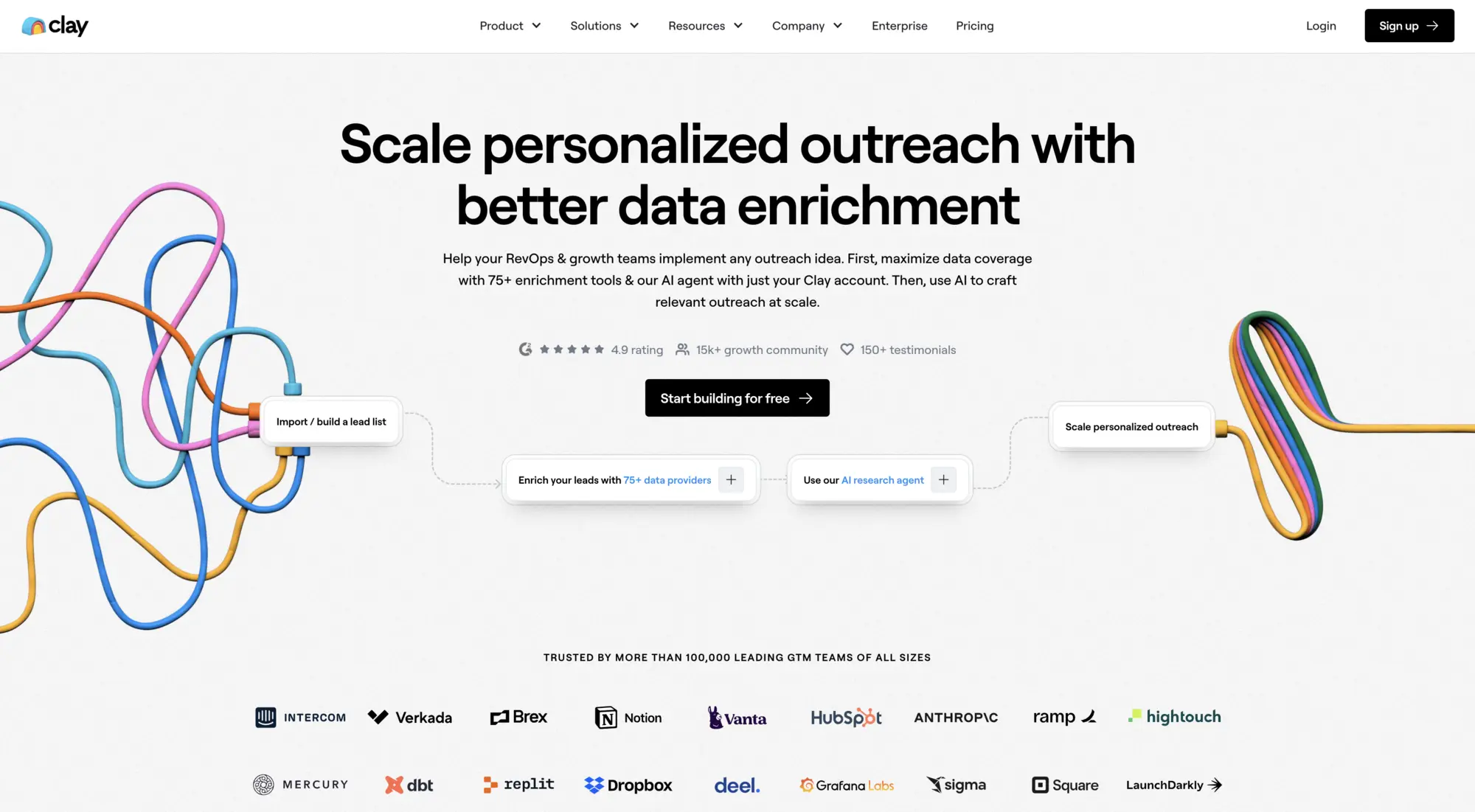
Private equity analysts, deal origination teams, and research professionals aiming to streamline sourcing and maintain high lead accuracy and outreach relevance. Clay sits between your company database and your outreach tool, enriching and personalizing at scale.
Clay integrates with Google and LinkedIn to generate detailed lead lists and uses AI-driven messaging for targeted outreach. The waterfall function enriches records with verified contacts and syncs them to HubSpot or your CRM, reducing bounce rates and increasing data accuracy.
Instantly.ai enables private equity professionals to streamline cold email outreach with automated sequences, a spam-avoidance warm-up feature, and robust analytics, all in one platform. It simplifies high-volume email campaigns, improving deliverability and engagement.

Deal sourcing teams running high-volume cold email campaigns to business owners. Good entry-level outreach tool for search funds and smaller PE teams before volume justifies more complex platforms.
With Instantly.ai, teams automate outreach for high-volume acquisition campaigns. The deliverability optimization and lead verification features reduce bounce rates while automated follow-ups and analytics help identify and nurture high-potential leads with minimal manual intervention.
Reply.io helps private equity deal sourcing teams streamline outbound campaigns through automated sequences, AI-powered personalization, and robust multichannel integration. The platform offers email, LinkedIn, and call integrations, making it useful for PE teams seeking organized outreach across multiple channels.

Deal sourcing teams that require multi-channel outreach and personalized follow-ups. More comprehensive than Instantly.ai but also more complex to set up and manage.
Reply.io engages potential acquisition targets across email and LinkedIn simultaneously. Teams leverage AI-recommended responses and personalized follow-ups, saving time on manual outreach while improving response rates.
Smartlead enables high-volume email outreach with automation and deliverability features designed to maximize engagement for private equity deal sourcing. It is highly scalable, allowing users to handle hundreds of inboxes and campaigns simultaneously.

Private equity professionals managing multiple campaigns and inboxes who need an automated, deliverability-focused platform. Better fit than Instantly.ai for teams running 10+ separate outreach campaigns simultaneously.
Deal sourcing teams leverage Smartlead to increase outreach volume without compromising deliverability. With AI-driven reply categorization and multi-inbox management, they efficiently scale campaigns while tracking success through Smartlead's analytics.
Apollo is a B2B contact database and outreach sequencing platform with 275 million contacts across 73 million companies. PE deal teams use it for one primary job: enriching a target company list with direct email addresses and phone numbers for the owner or relevant executive before initiating outreach. It is the contact data layer, not the company identification layer.
You bring the target list from PitchBook, Grata, SourceScrub, or internal research and Apollo provides the contact layer. Find the owner or executive, pull their direct email and phone number, and either initiate sequences within Apollo or export to a dedicated outreach tool like Instantly.ai. Apollo also has native email sequencing for teams that want to consolidate contact data and outreach in one platform.
Data accuracy is consistently reported in the 65-80% range across real-world user reviews. Phone number accuracy runs lower than email accuracy. Apollo performs better for corporate executives at larger companies than for owner-operators of small private businesses, which is the primary use case for LMM PE sourcing.
Affordable, scalable contact data for teams that cannot justify ZoomInfo's enterprise pricing. The free tier is functional for validating fit before committing to a paid plan. Best starting point for search funds and smaller PE teams before outreach volume justifies a ZoomInfo contract.
Coverage of private company owner-operators specifically. If your outreach targets are founders and owners of businesses doing $2-20M in revenue, Apollo's data thins out significantly. This is the core limitation for LMM deal sourcing workflows.
Free tier available with limited credits. Basic: $49 per user per month. Professional: $99 per user per month. Enterprise: custom.
Apollo is the right contact data starting point for smaller teams that need affordable enrichment without committing to a ZoomInfo contract. Accept the accuracy limitations as a function of the price point and build outreach sequences accordingly. Most PE deal teams running direct owner outreach need either Apollo or ZoomInfo. Running neither and hoping a company database will produce owner contact information is not a sourcing strategy.
ZoomInfo is the institutional-grade B2B contact database, with 260+ million profiles, proprietary human-verified data, and intent signal tracking. It is what PE deal teams graduate to from Apollo when contact accuracy becomes mission-critical and outreach volume justifies the investment.
Research and contact enrichment for outreach targets: verified direct phone numbers and emails for executives and owners, personnel change alerts that can signal exit readiness, and intent data that tracks which companies are actively researching relevant terms online. ZoomInfo integrates directly with most CRM platforms for contact enrichment within existing workflows.
Widely considered more accurate than Apollo for direct dials, particularly for companies with 50+ employees. G2 rating of 4.4 from nearly 8,000 reviews. The most consistent complaint: pricing opacity and mandatory annual contracts. Smaller teams frequently report that ZoomInfo reps bundle modules they do not need, inflating the effective cost.
Data accuracy and direct dial quality. ZoomInfo's 50 million verified direct dials are a real differentiator over Apollo's 120 million phone numbers of varying reliability. For teams running high volumes of cold calling, the accuracy advantage compounds. Intent data tracking is the most defensible ROI case for M&A origination.
Coverage of very small owner-operated businesses. Below $5M in revenue, ZoomInfo's data coverage drops materially. Annual contract requirements also create lock-in risk for teams that want flexibility to adjust their stack.
Not publicly listed. Typical contracts run $18,000-$25,000 per year for a few seats. Enterprise engagements with intent data modules can exceed $30,000 annually. Annual contracts are standard; monthly billing is generally not available.
ZoomInfo earns its price for teams running consistent, high-volume outreach where contact accuracy directly affects pickup rates. If you are running 100+ owner calls per month, the accuracy advantage over Apollo compounds. If you are running fewer than 30 calls per month, Apollo does 80% of the job at 10% of the cost. The decision is volume-dependent, not a quality judgment about which tool is better in the abstract.
Apify is a versatile platform for web scraping and automation, transforming websites into APIs and offering ready-to-use scrapers (referred to as "actors") for quick deployment. Known for its thorough documentation and ease of use, Apify helps users navigate anti-bot defenses and scale their data extraction workflows efficiently.

Private equity teams needing reliable and automated data scraping solutions for market analysis, competitive insights, or lead generation across multiple sources.
A firm's research team uses Apify to collect data across social media and industry-specific sites, automating complex workflows that integrate with their CRM. This allows them to analyze trends without manual data entry.
Serper provides a high-speed Google Search API designed for real-time data needs, offering access to a range of search types including news, images, videos, and maps within seconds.

Firms needing scalable search data access across varied Google platforms without API management complexity.
For a private equity firm conducting market or competitor research, Serper's fast, adaptable API provides rapid access to detailed data from Google, enhancing insights while minimizing resource use.
ScraperAPI enables private equity firms to streamline high-volume data extraction for deal sourcing and market intelligence. It automates proxy management, CAPTCHA handling, and JavaScript rendering, allowing firms to bypass traditional web scraping obstacles and gather essential market data efficiently.

Private equity analysts, business development teams, and market researchers who need consistent access to large volumes of external data for deal flow analysis, market intelligence, and competitor monitoring.
Bright Data offers a powerful suite of tools for private equity firms that require consistent, reliable access to global data sources across sectors. Designed to handle complex data extraction needs, Bright Data enables firms to collect high-quality, real-time data from hard-to-reach or dynamic sources.

Private equity teams, due diligence analysts, and investment researchers needing scalable data extraction and comprehensive, structured datasets across various digital platforms.
Bloomberg is an industry-leading platform offering comprehensive real-time financial data, analytics, and news. The Bloomberg Terminal connects users to live market data, trading, and portfolio management tools, covering fixed income, equities, derivatives, private companies, and economic trends globally. The platform's high cost is a genuine barrier for most LMM-focused teams.

Investment professionals and portfolio managers at larger funds needing deep public markets data. For LMM PE firms focused on private company deal sourcing, Bloomberg is rarely the right first investment.
CB Insights provides a robust platform for tracking trends, funding rounds, and insights across tech-driven industries like AI, cybersecurity, and climate tech. Real-time data and curated expert collections streamline research and strategic planning.

Corporate venture teams, business development professionals, and analysts tracking tech trends and funding activities. Less relevant for LMM buyout-focused PE firms.
Crunchbase is a platform for discovering and tracking businesses, investors, and funding data. It provides insights on funding rounds, mergers, and key personnel. Some users note that data accuracy may occasionally lag, especially in free versions.

PE firms targeting tech, SaaS, or venture-backed companies as acquisition targets. Less useful for traditional LMM sectors where company data is thin.
FactSet is a financial research tool valued by private equity teams for fast access to public and private company data. Known for affordability relative to Bloomberg, FactSet enables firms to identify deal opportunities and access data more quickly than higher-priced alternatives.

Private equity and investment teams who need reliable data access and analysis tools without the overhead of higher-priced platforms.
S&P Capital IQ provides extensive financial data, particularly for private equity teams needing real-time market analysis and financial models. Known for detailed insights on public companies; private company data is less consistent in real-time accuracy.

PE teams and investment analysts who need reliable financial data without the cost of higher-priced platforms. Good for sector research and benchmarking; not primarily a deal sourcing tool.
Refinitiv Eikon is a comprehensive financial analytics and market data platform used for real-time data, portfolio management, and financial modeling. Users note a learning curve and that it can be resource-intensive relative to what most LMM PE teams actually need from a market intelligence tool.
.webp)
Analysts, portfolio managers, and investment professionals who need detailed financial data and powerful analytics tools. More suited to larger funds than LMM-focused deal teams.
Datasite provides a highly secure, robust virtual data room (VDR) for managing complex M&A processes. Known for great customer service and ease of setup, it is widely trusted among private equity firms for managing due diligence, document sharing, and tracking user activity.

PE firms needing a comprehensive and secure VDR with high scalability for large data sets.
Investment teams use Datasite to securely share sensitive documents with multiple stakeholders across due diligence processes, with granular permission controls on who can view what.
Box is a robust cloud storage and collaboration tool that enhances accessibility, organization, and security for PE teams. Its extensive integrations with enterprise software and unlimited storage streamline data sharing and file versioning, making it easy to track portfolio updates and manage sensitive documents securely.
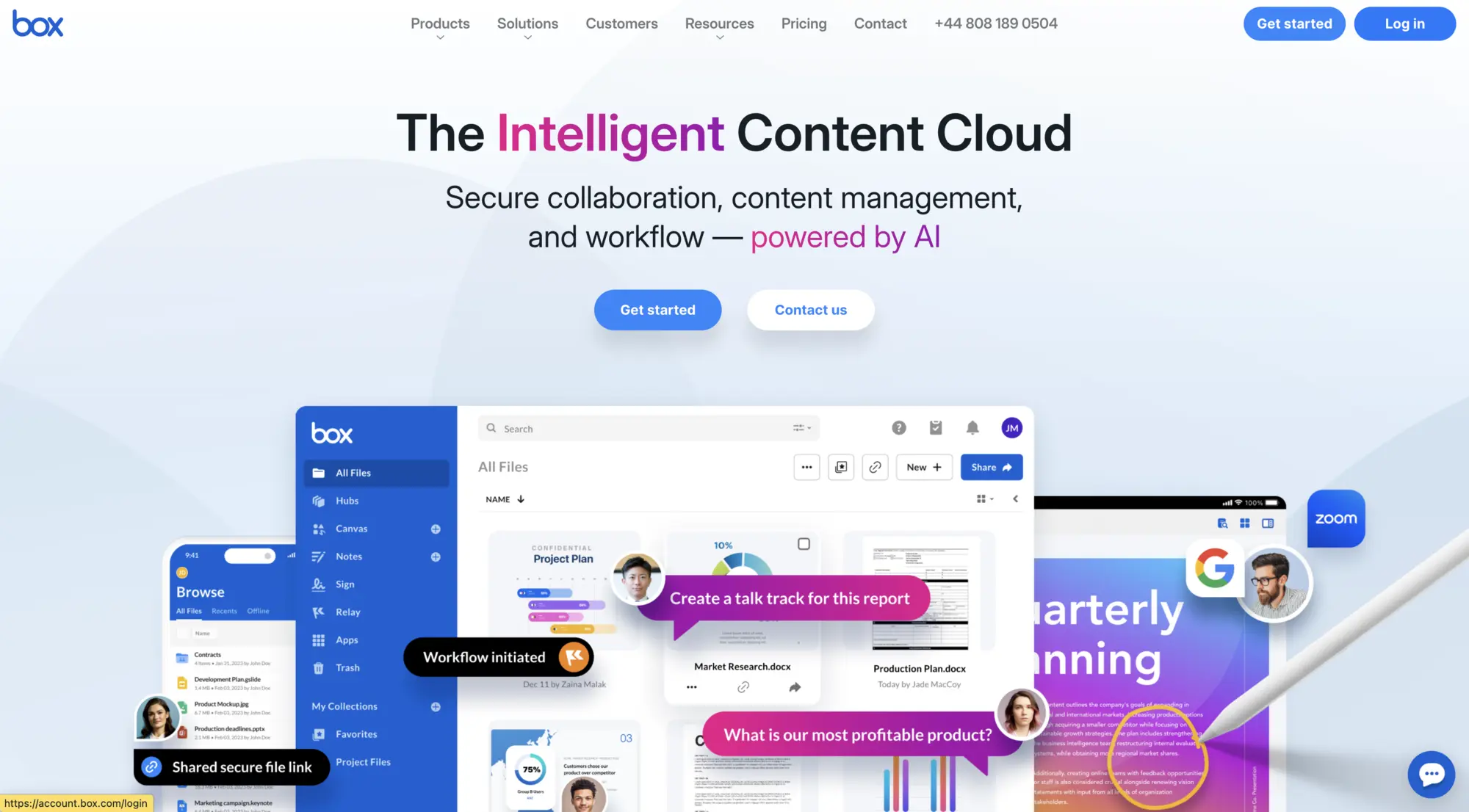
PE firms prioritizing data security, collaboration, and easy document management across teams and clients. A lighter-weight alternative to dedicated VDRs for early-stage diligence.
A PE team uses Box to securely store and share due diligence documents, track portfolio performance, and collaborate across departments and with external partners in real time.
The most common mistake PE teams make with their sourcing stack is over-investing in company databases and under-investing in contact data and outreach execution. A team that has PitchBook, Capital IQ, and Grata but no reliable way to find the owner's phone number or run a systematic outreach sequence has a sourcing problem, not a data problem.
You need: contact data (Apollo), a lightweight CRM (HubSpot or Pipedrive), and a company database (SourceScrub or Grata for initial screening). Add an outreach sequencing tool like Instantly.ai once you are running consistent volume. Total monthly cost: $100-300. Do not buy PitchBook or DealCloud at this stage. They are not the bottleneck.
You need: an outsourced origination layer (SourceCo or Captarget for consistent pipeline), a relationship CRM (4Degrees or Affinity), a market intelligence database (PitchBook or Capital IQ), and contact enrichment (Apollo). Add Axial once you exhaust the owner-direct channel and want broader advisor network coverage. Total monthly cost: $4,000-8,000 depending on origination approach.
You need: SourceCo as your primary origination engine for your sector, ZoomInfo for contact data at volume, DealCloud or Affinity for CRM with pipeline management, and Clay for data enrichment automation. Axial is a reasonable addition for advisor coverage in your target sectors. Total monthly cost: $8,000-15,000.
You need: a retained origination partner (SourceCo), a pipeline management platform (Midaxo or DealCloud), ZoomInfo for contact research, and PitchBook or Capital IQ for market intelligence. A VDR (Datasite) when deals reach diligence. Total monthly cost: $15,000-30,000 depending on deal volume.
There is no single best tool because deal sourcing has multiple distinct jobs: finding target companies, enriching contact data, managing relationships, running outreach, and tracking pipeline. The best-performing stacks combine a company database, a contact data layer, a relationship CRM, and either an in-house outreach process or an outsourced origination partner. Firms that try to solve sourcing by adding another database without fixing the outreach layer rarely see improvement.
Axial is worth it if you need systematic coverage of boutique LMM advisors and you understand what you are buying: intermediated deal flow going to hundreds of competing buyers simultaneously. For funds doing 10+ deals per year that want to minimize blind spots in boutique advisor coverage, the uncapped volume pricing is defensible. For teams focused on off-market, owner-direct sourcing, Axial is structurally the wrong tool.
Axial is a marketplace for intermediary-represented deals. Advisors post deals and select which buyers receive them. SourceCo is a buy-side origination firm that goes directly to business owners before they engage an advisor, mapping 2M+ private companies weekly and initiating outreach on behalf of clients. Axial gives you access to deals already in an advisor process. SourceCo finds companies before any process exists.
Both, depending on team size and outreach volume. Smaller funds and search funds typically use Apollo for its lower price point and free tier. Larger funds with dedicated BD staff and high outreach volume use ZoomInfo for superior data accuracy and intent signal capabilities. Fewer than 30 owner calls per month, Apollo. More than 100 calls per month, ZoomInfo is worth the premium.
Off-market sourcing happens through three channels: direct outreach to business owners (either in-house BDR teams or outsourced through firms like SourceCo or Captarget), referral networks from operating partners and advisors, and systematic market mapping of private companies in target sectors. The most consistent off-market deal flow comes from firms that run continuous, high-volume outreach programs rather than episodic campaigns when they need deal flow.
The most widely used options in the lower middle market are DealCloud (larger funds with complex compliance and workflow requirements), Affinity (teams prioritizing relationship intelligence and automatic contact logging), 4Degrees (PE and VC teams focused on network tracking), and Pipedrive or HubSpot (smaller teams and search funds where price matters). Salesforce is used at some larger platforms but requires significant customization to work well for deal pipeline management specifically.
A functional sourcing stack for a small PE fund typically runs $3,000-8,000 per month all-in: a company database ($500-1,500), contact data ($50-500), a relationship CRM ($200-800), and an outreach component or outsourced origination partner ($2,000-6,000). The highest-ROI investment in most stacks is the origination and outreach layer, not the database layer, which is where most teams are already over-invested.
Typically yes, if you are doing fewer than 5 deals per year and lack dedicated BD headcount. Hiring a full-time BD professional costs $150,000-250,000 in base salary plus benefits, with an 8-12 month ramp to first qualified conversation. Outsourced origination via SourceCo or Captarget costs $4,000-8,000 per month on a month-to-month basis, with first conversations typically starting within 40-65 days. The economics favor outsourcing until deal volume justifies a dedicated hire.
Free Valuation Tool
.svg)
Before you contact a single buyer, get a first-pass estimate of what your shop could be worth. It takes two minutes and requires no outreach, no disclosure, and no commitment to a process.
Get Your Free Valuation
.svg)
Confidential & Free
.svg)
Before you contact a single buyer, get a first-pass estimate of what your shop could be worth. It takes two minutes and requires no outreach, no disclosure, and no commitment to a process.
Talk to an Owner Advisor
Active Buyers
.svg)
Match with pre-screened buyers from our network of 4,000+ active acquirers - see who is looking for a business like yours instantly.
See Who is Buying
.svg)
.svg)


.svg)
